
Controls
About this game
Matching Mechanics and Learning
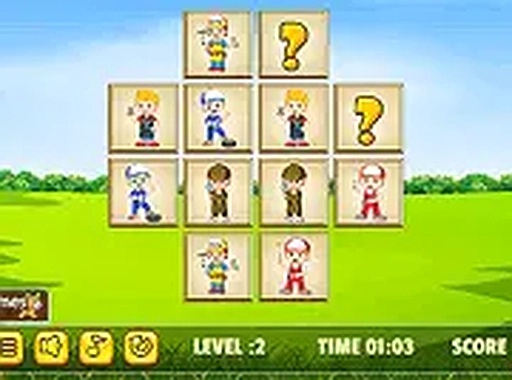
Players begin by tapping or clicking on cards to see the illustrations underneath. Each card shows a child in a different professional outfit, such as a scientist or nurse. The objective is to remember the location of each image and pair identical cards. When two matching cards are found, they remain face-up, revealing a complete set. This process encourages careful observation and strengthens recall abilities in a low-pressure setting.
Visual Style and Accessibility
The artwork uses bright, friendly colors and simple shapes that appeal to young audiences. Characters are depicted in positive, non-threatening poses, making the experience welcoming for toddlers and early elementary students. The interface features large buttons and clear labels, so even children who are not yet reading can navigate independently. The game runs smoothly on tablets, phones, and computers without any special software.
Progression and Challenge
As players advance, the board may contain more cards, increasing the difficulty gradually. Some versions include a gentle timer or move counter to encourage improvement, but the primary focus remains on careful observation rather than speed. This structure allows children to build confidence at their own pace while still feeling a sense of accomplishment when completing a round.
Educational Value and Career Exposure
Each pair of cards introduces a different occupation, from firefighters to artists. This gives parents and teachers a natural opportunity to discuss what these professionals do and how they help the community. The game supports cognitive development by requiring players to hold multiple images in memory while searching for matches. It also promotes patience and focus, skills that benefit academic learning.
Compatibility
Screenshots
How To Play
Player Reviews
Occupation Memory Match stands out for its gentle approach to cognitive training. The career theme adds a layer of educational value that parents appreciate, while the simple mechanics keep young players engaged. The interface is intuitive enough for a three-year-old to navigate, yet the progressive difficulty offers enough challenge to hold a six-year-old's interest. The lack of ads and in-app purchases makes it a worry-free choice for families. Overall, it is a solid, well-designed tool for developing memory skills in a positive context.




Comments
Sign in to leave a review
Share your rating and tip other players.
No account? Create one
No comments yet.